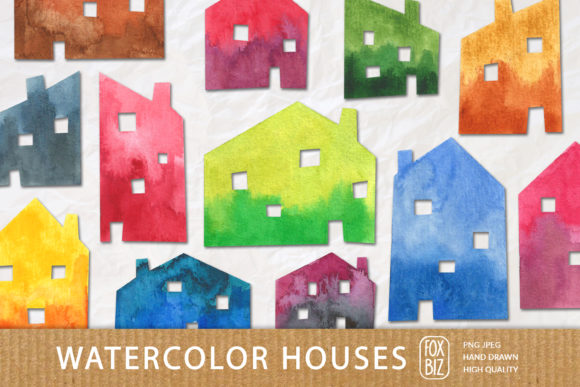
Review: Watercolor Hand Drawn Cute Houses for Embroidery
As a designer who spends more time staring at stitch simulations than most people care to admit, I approach new machine embroidery design files with a healthy dose of skepticism. We have all seen those "cute" graphics that look adorable on a screen but turn into a tangled mess of thread breaks and puckering once they hit the hoop. That is exactly why I pulled up the Watercolor Hand Drawn Cute Houses file before committing it to a client project. This isn't just about whether it looks nice; it is about whether it survives the reality of the embroidery machine and delivers value to the end user.
The first impression of this Illustrations set is undeniably charming. There is a softness to the lines that mimics the bleed of actual watercolor paint, which is a difficult aesthetic to replicate in thread. The shapes are whimsical, featuring slightly crooked roofs and rounded windows that evoke a storybook feel. However, from a technical standpoint, my immediate concern was how these organic, hand-drawn lines would translate into rigid stitch paths. Would the "watercolor" effect rely on complex blending that requires high-end machines, or was it built with standard satin stitch and fill stitch techniques that any home hobbyist could run? Upon closer inspection of the digitizing, the flow feels intentional. The layout avoids overly dense clusters, suggesting the digitizer understood that air between stitches is often what creates the illusion of a watercolor wash.
Real-World Application: The Boutique Tote Test
To truly evaluate the Watercolor Hand Drawn Cute Houses, I decided to test it in a scenario that many Etsy seller and small shop owners face daily: creating a custom tote bag design for a local boutique. The goal was to produce a handmade product that felt premium enough to justify a higher price point but durable enough for grocery runs and beach trips. I chose a natural canvas tote, as the texture of the fabric can sometimes fight against detailed embroidery.
The stitching process revealed the true character of this embroidery file. On the canvas, the design held its shape remarkably well. The "hand-drawn" quality shined because the stitch direction varied slightly in the roof sections, mimicking the brushstrokes of an original painting. For a finished product intended for retail, this level of detail is crucial. It moves the item away from looking like a generic mass-produced good and toward feeling like a piece of art. Customers today are savvy; they can spot a low-effort design from a mile away. This design, however, invites a second look. It suggests that care went into the creation, which builds immediate customer trust and enhances the perceived value of the small shop product.
Navigating Fabric Challenges and Stitch Density
While the tote bag was a success, a responsible reviewer must address where this design might struggle. The Watercolor Hand Drawn Cute Houses relies on a specific balance of stitch density. If you attempt to run this on a highly textured fabric like a thick chenille sweatshirt or a loose-knit beanie, you risk losing the finer details of the windows and doorways. The running stitch outlines that define the charm of the houses could get swallowed by the fabric pile.
Furthermore, caution is advised when working with stretchy fabrics or dark backgrounds. If you are planning sweatshirt embroidery or baby embroidery on a onesie, the stability of the garment is paramount. I strongly recommend using a high-quality cut-away stabilizer rather than tear-away for this specific design. The whimsical nature of the houses means there are isolated elements that need anchoring; without proper support, the design could shift or pucker after the first wash. Additionally, if you are stitching on dark fabric, ensure your thread colors have enough opacity. The watercolor effect often uses lighter, translucent shades which might require an underlay adjustment or a lighter base thread to pop against navy or black materials.
Commercial Viability and Brand Consistency
For creative entrepreneurs and apparel decorators, the question always comes down to commercial viability. Does this design fit into a cohesive brand? The Watercolor Hand Drawn Cute Houses excels here because it is versatile without being generic. It fits perfectly into niches ranging from nursery decor and holiday embroidery gifts to real estate closing presents and community branding. I could easily envision this as an embroidered patch sewn onto a denim jacket or as a central motif on a kitchen tea towel.
The visual appeal translates directly to buyer engagement. In the world of digital embroidery file sales or finished goods, presentation is everything. This design photographs beautifully because the varying stitch angles catch the light differently, adding depth to printable mockup images. For an Etsy listing, this dynamic look can be the difference between a scroll-past and a click. It signals professionalism. When a customer sees a design that looks like it was painted by hand but executed with the precision of a machine, it validates the skill of the maker.
Practical Notes for the Serious Maker
Before you commit to a full production run or list this as a design assets in your shop, there are a few practical steps you must take. First, always test the design on a scrap piece of your intended fabric. What works on cotton twill might behave differently on silk or fleece. Check the hoop size requirements carefully; while the design looks compact, ensure your machine's hoop can accommodate the full width without needing a re-hoop, which can lead to alignment issues.
Pay close attention to the tiny details. In some versions of hand-drawn styles, very small elements like doorknobs or chimney smoke might be digitized with such fine running stitch that they are prone to breaking. Inspect these areas in your software before stitching. If you plan to sell the finished product, verify the licensing terms associated with the Watercolor Hand Drawn Cute Houses file. Some creators allow unlimited commercial use for physical items but restrict the sale of the digital file itself. Clarity here protects your craft business from legal headaches down the road.
Finally, consider the context of the gift or product. Is this for a personalized gift meant to be cherished forever, or a fun accessory for a season? The durability of the stitch-out suggests it can handle frequent washing if cared for properly, making it suitable for custom apparel that sees daily wear. However, avoid placing it in high-friction areas like the elbow of a sleeve or the bottom of a bag where abrasion could wear down the threads quickly.
In conclusion, the Watercolor Hand Drawn Cute Houses is a standout choice for designers looking to add a touch of artistic flair to their embroidery project lineup. It bridges the gap between digital precision and analog warmth. While it demands respect regarding fabric choice and stabilization, the payoff in terms of aesthetic quality and customer satisfaction is significant. For those willing to do the prep work, this design is a reliable tool for creating memorable, high-value items that stand out in a crowded marketplace.