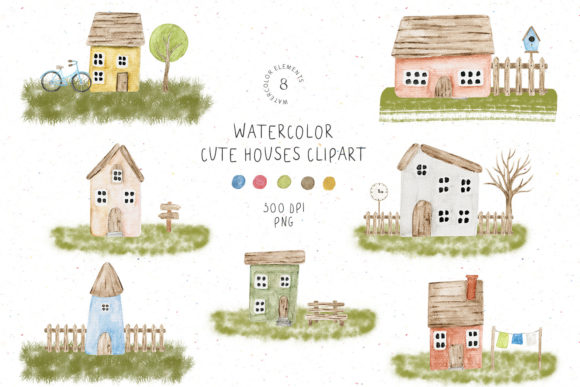
Watercolor Cute Houses Clipart: Charming Illustrations
As a brand designer and content marketer, my first interaction with a new graphic design asset is always about emotional resonance. When I opened the files for Watercolor Cute Houses Clipart, the immediate impression was one of warmth and approachability. In an era where digital interfaces can often feel cold or overly corporate, these Illustrations bring a necessary human touch. The soft edges, the blending of pigments, and the whimsical architecture create a mood that screams "handmade" and "cared for." For brands operating in the lifestyle, real estate, parenting, or handmade goods sectors, this specific aesthetic is not just decorative; it is a strategic tool for building audience trust. It signals to the viewer that the business behind the logo values charm and personality over rigid industrialism.
Strategic Application in Real-World Marketing Campaigns
To truly evaluate the utility of this design bundle, I imagined a real-world scenario: a small business launching a seasonal "Home Comforts" product line. This could be a boutique selling scented candles, a digital planner for home organization, or a coaching service for new homeowners. In this context, Watercolor Cute Houses Clipart becomes the visual anchor. Unlike generic stock photography, these Illustrations offer a unique style that prevents the brand from looking like every other competitor on the feed.
The versatility of this digital product shines when applied across various touchpoints. For social media graphics, specifically Instagram posts and Stories, the clipart serves as an excellent background element or a focal point for text overlays. Because watercolor textures naturally possess varying levels of opacity, they allow designers to layer text without sacrificing readability, provided the contrast is managed well. For Pinterest pins, which rely heavily on vertical imagery and aspirational aesthetics, these house motifs are perfect for creating click-worthy visuals that drive traffic to blog posts or product pages.
Beyond social media, the asset holds significant weight in packaging design and product label creation. Imagine a sticker sheet included in a shipment or a thank-you card tucked into a box; using these cute houses reinforces the brand narrative of "home" and "comfort." For web design, these elements can break up dense text on a landing page, acting as visual breathing room that guides the user's eye toward the call-to-action. Even in editorial design for eBooks or lead magnets, the clipart adds a layer of professionalism that feels curated rather than templated.
Enhancing Brand Identity and Visual Hierarchy
The primary marketing goal of any creative design is to establish a strong first impression. Watercolor Cute Houses Clipart excels here by offering a distinct visual language. When used consistently, it strengthens brand identity. If a brand uses these specific house styles in their logo design accents, email banners, and ad creatives, the audience begins to recognize the brand instantly. This consistency fosters professional branding perception, proving that even a playful aesthetic can be executed with precision.
Furthermore, these Illustrations aid in establishing a clear visual hierarchy. In a crowded digital ads landscape, a watercolor house stands out against the sharp, vector-based graphics that dominate the market. It draws the eye organically. For content marketing, this means higher engagement rates. People are more likely to stop scrolling for an image that evokes nostalgia or comfort than one that looks like a standard corporate template. The emotional connection forged by the soft, artistic style translates into better retention of the marketing message.
Ideal Use Cases for Maximum Impact
Not all assets work everywhere, but Watercolor Cute Houses Clipart has specific zones where it performs exceptionally well. It is ideally suited for:
- Hero Graphics: Using a large, detailed house illustration as the main visual on a website header or campaign landing page.
- Branded Templates: Incorporating the clipart into Canva template kits sold to other creators or used internally for quick content generation.
- Promotional Banners: Adding a whimsical touch to sale announcements or event flyers without overwhelming the text.
- Packaging Accents: Using smaller elements as patterns on wrapping paper or tape.
- Decorative Brand Elements: Serving as watermarks or subtle background textures in media kits and presentations.
In these scenarios, the asset supports the narrative of a small business branding effort that prioritizes connection and storytelling. It works particularly well for printable design projects, such as planners, journals, and wall art, where the texture of the watercolor adds perceived value to the physical or digital end product.
Critical Limitations and Design Cautions
However, a professional review must also address where caution is required. Watercolor Cute Houses Clipart may not be the right fit for formal corporate branding in sectors like finance, law, or heavy industry, where authority and rigidity are preferred over whimsy. Additionally, designers must be careful with dense information layouts. Watercolor images often have complex textures and varying color densities; placing them behind small text can ruin readability.
There is also the risk of the asset competing with the main message if used too aggressively. In text-heavy ads or small mobile graphics, a highly detailed house illustration might become muddy or indistinguishable. It is crucial to ensure there is enough negative space around the clipart to let it breathe. For overly minimal brands that rely on stark black-and-white contrasts, introducing colorful watercolor elements could disrupt the established visual equilibrium unless carefully color-corrected.
Professional Designer Notes for Implementation
Before integrating Watercolor Cute Houses Clipart into a client project or a commercial campaign, I recommend a rigorous testing phase. First, test it with the brand color palette. Watercolors often come in specific hues; ensure they harmonize with your existing brand colors or can be easily recolored if the file format allows (such as with SVG design files). Always check how the asset performs in black and white usage, as some marketing materials, like faxed documents or certain newspaper inserts, may require monochrome compatibility.
Placement is key. Place it inside real campaign mockups before finalizing. Does it look good on a smartphone screen? Preview it on mobile screens specifically, as details that look crisp on a desktop monitor can blur on smaller displays. Test readability in small sizes to ensure the "cute" factor doesn't turn into visual noise. It is also wise to compare it against competitor visuals to ensure your brand stands out rather than blends in with similar aesthetic trends.
Typography pairing is another critical consideration. These Illustrations pair beautifully with script font and handwritten font styles to enhance the handmade feel. However, for a more modern twist, try pairing them with a clean sans serif font to create a balance between playful and professional. A bold display font can also work well for headlines, while a classic serif font adds a touch of editorial elegance. Finally, always review spacing and balance within the layout to maintain a clean composition.
Most importantly, confirm commercial licensing before using these assets in paid campaigns, client work, or business branding. Whether you are creating a commercial design for a Fortune 500 company or a digital product for Etsy, understanding the rights associated with the creative marketplace purchase is non-negotiable. Ensure the license covers the scope of your project, including print runs and digital distribution limits.
In conclusion, Watercolor Cute Houses Clipart is a powerful graphic design asset for those looking to inject warmth and personality into their marketing visuals. When used with strategic intent and attention to detail, it transforms standard content marketing into an engaging brand experience that resonates deeply with audiences seeking authenticity and comfort.